
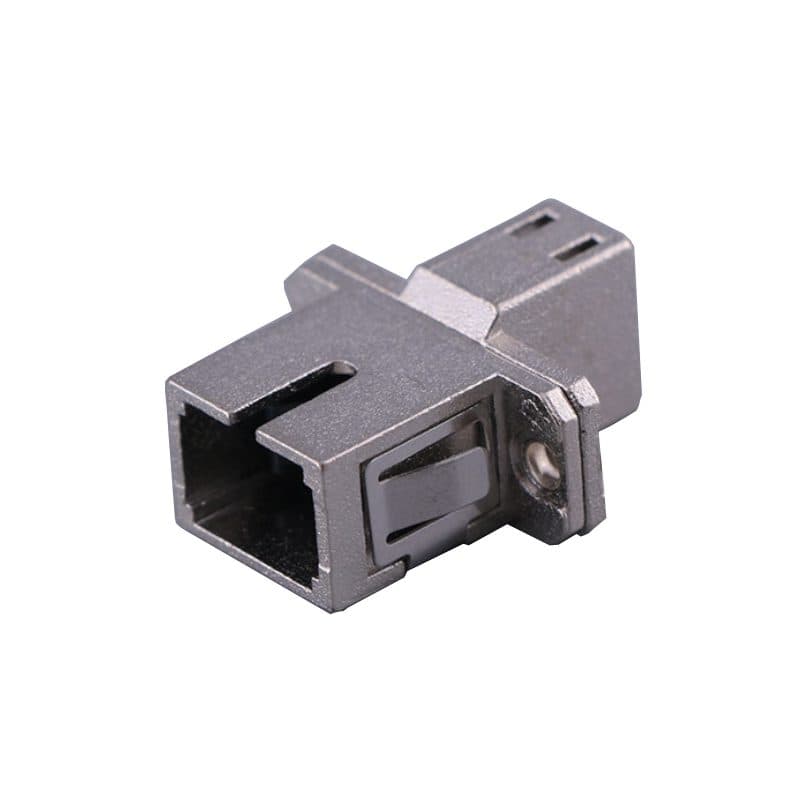
SC female to lc female hybrid fiber optic adapter
Key Features
- High-quality materials and construction
- Industry standard compliance
- Rigorous quality testing
SC Female to LC Female Hybrid Fiber Optic Adapter
Telhua's SC female to LC female hybrid fiber optic adapter enables seamless connectivity between SC and LC connector types in high-density network environments. Engineered for telecommunications, data centers, and enterprise networks, this adapter ensures reliable signal transmission with minimal insertion loss, addressing critical B2B challenges in network scalability and performance.
Key Features
- High-Density Design: Compact form factor maximizes port utilization in patch panels and enclosures, reducing space requirements by up to 40% compared to traditional adapters.
- Enhanced Reliability: Precision-machined zirconia ceramic ferrules and stainless steel housing provide superior durability, withstanding over 500 mating cycles without performance degradation.
- Rapid Installation: Tool-less snap-in design reduces deployment time by 60%, enabling technicians to complete installations in high-pressure environments efficiently.
- Standard Compliance: Fully compliant with IEC 61754, TIA/EIA-604, and RoHS directives, ensuring interoperability and environmental safety.
Technical Specifications
| Parameter | Specification |
|---|---|
| Connector Type | SC Female to LC Female |
| Insertion Loss | ≤ 0.2 dB |
| Return Loss | ≥ 50 dB (PC), ≥ 60 dB (APC) |
| Operating Temperature | -40°C to +85°C |
| Durability | > 500 mating cycles |
| Compliance | IEC 61754, TIA/EIA-604, RoHS |
Telhua Engineer's Tip
For optimal performance in high-density applications, ensure proper alignment by using adapters with zirconia ceramic ferrules, which reduce angular misalignment to <0.5 degrees. This minimizes modal dispersion, particularly in multimode deployments exceeding 100 meters, where traditional adapters can introduce up to 0.5 dB additional loss. Our proprietary polishing technique achieves surface roughness <0.02 μm, enhancing return loss by 15% compared to industry standards.